Brushes & tools
Practical guides to cleaning, drying and caring for watercolor brushes and art tools.
Art materials, explained
Choose paper, understand your paint, and get more from your brushes and pencils. Find practical comparisons, beginner exercises and a free printable paper comparison sheet.
Find a material guide →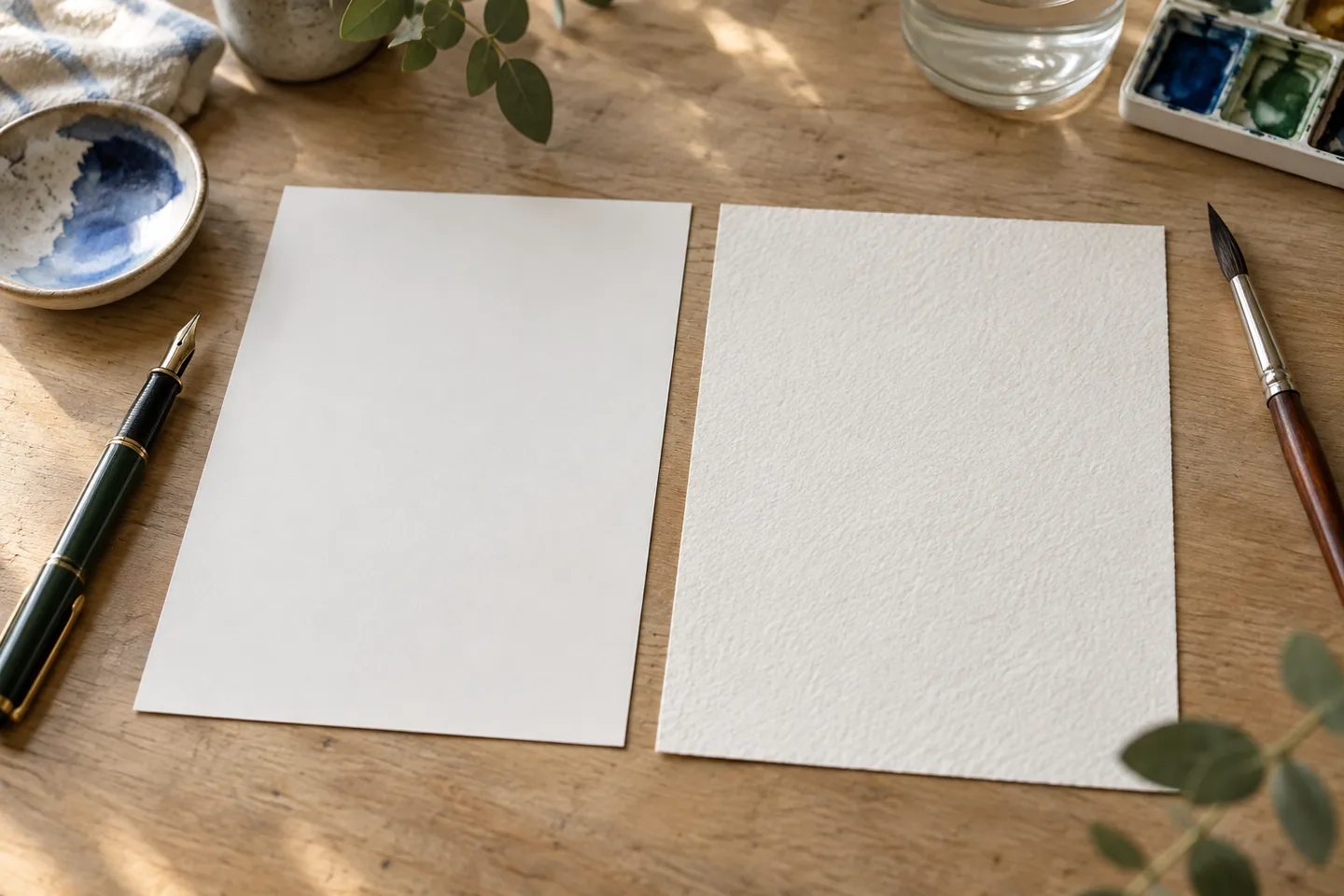
Choose the question you want to answer
Practical guides to cleaning, drying and caring for watercolor brushes and art tools.
Understand gouache paint, opacity and the differences between traditional and acrylic gouache.
Watercolor paper surfaces, weight and practical comparisons.
Watercolor pencil techniques and small drawing exercises for exploring your materials.
Watercolor paint formats, palette choices and practical painting guides.
Paper, paints, brushes and pencils
 Pencils · Guide
Compare watercolor pencils and conventional colored pencils by water solubility, paper, layering and control so you can choose the right workflow.
Read the guide → Pencils · Guide
Understand H, HB, B and F graphite pencil grades, then choose a small working range by the line, value and paper you actually use.
Read the guide → Watercolor · Guide
Learn what transparent, semi-transparent and opaque watercolor ratings mean, why a thin wash changes the look, and how to compare colors on paper.
Read the guide → Watercolor · Guide
Understand staining and non-staining watercolor ratings, what lifting can and cannot do, and how to make a small paper check before a painting.
Read the guide → Watercolor · Guide
Learn what watercolor granulation is, why paint and paper change the effect, and how to check one color without turning the result into a brand ranking.
Read the guide → Brushes & tools · Guide
Compare ceramic and plastic watercolor palettes for mixing space, beading and portability. Find out what to check before replacing your palette.
Read the guide → Paper · Guide
Choose between mixed media and watercolor paper by your painting method. Compare real specifications and try a small drawing-and-wash check.
Read the guide → Brushes & tools · Guide
Compare round and flat watercolor brushes by point, edge and paint capacity, then use a short exercise to decide which shape your kit needs.
Read the guide → Gouache · Guide
Find out when dried gouache can be reused, why acrylic gouache is different, and how to check reactivated paint for the coverage you need.
Read the guide → Watercolor · Guide
Learn how to reuse dried watercolor paint, distinguish palette leftovers from a solid tube, and check a small sample before your next painting.
Read the guide →Learn to use watercolor pencils with a three-part exercise: dry drawing, brush activation and finishing details, plus checks for your pencil range.
Read the guide →Clean watercolor brushes gently, reshape the tips and choose a drying position. Learn how to distinguish stained hair from leftover paint deposits.
Read the guide →Take it to your desk
Record the paper, repeat the same marks, and keep the results next to each other.